

How to Ask Clients for Testimonials
"I'm posting content every day, but nobody reaches out." If that's you, the content probably isn't the problem. People read it, then do what careful buyers do before hiring a coach or consultant: look for evidence that someone like them got a result with you. When they can't find it, they keep scrolling.
Most coaches and consultants earning $2K to $10K a month have happy clients and almost no visible proof. The clients aren't unwilling. They're busy, and almost nobody writes a testimonial unprompted. Asking feels awkward because it usually happens at a random moment, with a vague request and a blank page.
The fix is to treat proof as one working part of a client acquisition system that runs without you, not as a favor you work up the nerve to request. Below: when to ask, five questions that get specific answers, three scripts to copy, how to stay accurate, and where to put what you collect.
What are testimonials actually for?
When is the best time to ask for a testimonial?
Five questions that produce specific, believable testimonials
Three scripts: email, text and the end of a call
Text or LinkedIn message script
Why testimonials come out vague, and the fix
Permission and accuracy: the rules worth knowing
Get the free D6R Growth Blueprint
When is the best time to ask for a testimonial?
What questions should you ask for a testimonial?
How do you ask for a testimonial by email?
How do you ask for a testimonial on LinkedIn?
Key Takeaways
Ask within a day or two of a milestone win. Timing does more than wording.
Never ask a client to "write a testimonial." Ask five short questions and let their answers become it.
Use the same three scripts every time: email, a text or LinkedIn message, and the end of a call.
Quote clients exactly, get written permission, and never reward anyone for a positive review.
Put each testimonial next to the decision it helps a prospect make.
What are testimonials actually for?
Testimonials are for the stranger who's almost ready to contact you and needs to see that someone with their problem got a result.
That's why proof starts to matter once you move past your network and work on getting coaching clients consistently from people who don't know you yet. A podcast listener or a reader of your posts searches your name before reaching out, and what they find decides whether they book a call.

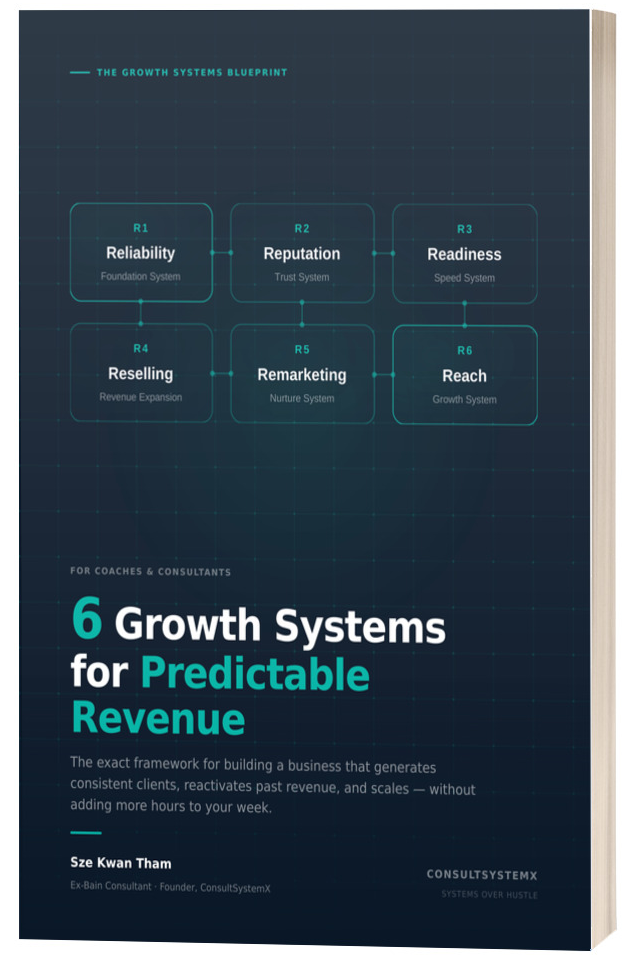
In the framework I use, this is the job of Reputation: evidence that does the selling before you're in the room. It comes before any push for more visibility, because attention sent to a profile with no proof mostly produces silent readers.
A quick yes-or-no check:
Could a stranger find three specific client results within two minutes of searching your name?
Do your testimonials name a change, not only a compliment?
Do you know the moment in your work when clients are happiest?
Is asking for a testimonial a step in your delivery, rather than something you do when you remember?
A no on 1 or 2 means you have some proof but not the useful kind, so start with the five questions below. A no on 3 or 4 means your asks happen at random, so start with timing.
When is the best time to ask for a testimonial?
The best time to ask is within a day or two of a milestone win, while the client still feels the difference you made.
A first visible result. The first signed client, the first calm week, the first meeting that went the way they rehearsed it.
A number moved. Revenue, hours, booked calls, or anything else they track and mention to you.
They say it first. A message like "this changed how I run my week" is an invitation. Reply warmly, then ask.
A program or project milestone. The midpoint review or the final deliverable, when you've both looked back at where they started.
A renewal or a referral. A client who signs again or introduces someone has already decided you're worth recommending.
Pick the two or three triggers that happen in every engagement you run, and write them into your delivery process. When a client hits one, the ask goes out that day.
Start here if you are:
A coach with weekly sessions: ask at the end of the session where they report a win, using the end-of-call script.
A consultant with project work: ask by email after a deliverable lands or a number moves.
Starting with no testimonials: ask your two most recent happy clients this week, even if the work ended a while ago.

Five questions that produce specific, believable testimonials
These questions produce specific, believable testimonials because they ask for a story with a before and an after, not for praise. "Would you write me a testimonial?" hands a busy person a blank page, and they fill it with the safest compliment they can think of.
What was going on before we started working together?
What made you decide to go ahead?
What's different now? If you can put a number or an example on it, please do.
What surprised you about working together?
What would you tell someone who's on the fence?
Together they cover the arc a prospect wants to read: before, the decision, what changed, the surprise, and advice to someone unsure. The fifth speaks to the reader peer to peer.
When the answers come back, your job is selection, not rewriting. Pick the two or three sentences that carry the change, send them back as the version you'd like to use, and ask the client to confirm or edit.
Three scripts: email, text and the end of a call
These scripts work because each names the specific win, keeps the ask small, and promises final approval. Pick the one that fits how you already talk to the client:
Script | Best for | Effort for the client |
|---|---|---|
End of a call | Coaches with regular sessions | Lowest: you're already talking |
Consultants with project milestones | Low: about five minutes | |
Text or LinkedIn message | Clients you message often | Low: one short reply |
Email script
Subject: Your [win]: five quick questions?
Hi [Name],
I'm still smiling about [the specific win]. Would you be willing to answer five short questions about how it went? I'd like to share your experience with people who are where you were when we started.
[The five questions]
There are no wrong answers, and as much or as little as you like is fine. I'll send the few sentences I'd like to use back to you for approval before anything is published.
Thank you either way,
[Your name]
If there's no reply after four or five days, send one follow-up inside the same thread, so the questions are right there: "Bumping this up in case it got buried. No pressure if now isn't a good time." Then stop. A third message turns a favor into a chore. An alternative subject line: "Can I share what you told me last week?"
Text or LinkedIn message script
"[Name], that's huge about [specific win]. Would you be open to sharing a few words about it? I can send five quick questions by email, and you'll see the final version before I use it anywhere."
On LinkedIn, send this as a normal message first. Once they agree, send the recommendation request and name the one thing you'd like them to speak to.
End-of-call script
"Before we wrap up: what you just said about [their words, repeated back] is exactly the kind of change I'd love other people to hear about. Could I send you five short questions about it? It takes about five minutes, and you'll approve the final wording."
Repeating their words back shows you listened, and it often hands you the testimonial first line on the spot. Send the questions within the hour.

Why testimonials come out vague, and the fix
Testimonials come out vague when the ask is late, open-ended or too big, and each has a simple fix.
Cause | What you may have noticed | What fixes it |
|---|---|---|
Asked weeks after the win | For example, "It was great working with you" and little else | Ask within a day or two of a milestone |
A blank-page request | For example, praise about you and nothing about them | Send the five questions |
An ask that feels big | For example, no reply, or "I'll get to it" | Ask for five minutes and offer to draft from their answers |
Polishing their words yourself | For example, every testimonial sounds like your website | Keep their phrasing; trim, don't rewrite |
Permission and accuracy: the rules worth knowing
Get written permission for each testimonial, quote the client accurately, and never reward anyone for saying something positive. I'm not a lawyer, so treat this as a plain summary of the US rules, not legal advice.
Honest opinions only. The FTC's Endorsement Guides say endorsements must reflect the endorser's honest opinions or experience.
Quotation marks mean their exact words. You can paraphrase an endorsement unless you present it as their exact words, and you can't reword or cut it in a way that distorts their opinion. Trim a quote if you need to. Don't improve it.
Results need context. If a testimonial describes an outcome clients don't generally get, the FTC expects the ad to make typical results clear. Feature the change and the experience, not one client's best number as the norm.
No rewards for praise. The FTC's guidance for businesses says you can't make an incentive, such as a discount, conditional on a review being positive. In August 2024 it also finalized a rule banning fake reviews and testimonials.
Agree where it appears. Confirm whether you can use their name, title, business and photo, and where. Ask again before using it somewhere new, and remove it promptly if they ask.
Testimonial reuse checklist
A testimonial earns its keep next to the decision it helps someone make, not on a page nobody visits. Keep every approved testimonial in one proof file, with the client's permission, the date and where it can appear. Then work down this list:
Your services or booking page, next to the button
Your proposal, matched to the concern that kind of client usually raises
Your follow-up emails after a discovery call
A LinkedIn post that opens with the client's own words
A short case study, once you've had a follow-up conversation
Match the testimonial to the doubt: results near your price, how it felt to work together where a nervous prospect decides whether to book. Review the file every quarter.

Get the free D6R Growth Blueprint
The free D6R Growth Blueprint shows how Reputation fits with the other five pieces behind consistent clients, each with a self-assessment and a 90-day roadmap. Get the free D6R Growth Blueprint.
Frequently Asked Questions
When is the best time to ask for a testimonial?
The best time is within a day or two of a milestone win, such as a first visible result or a message where the client tells you something went well.
What questions should you ask for a testimonial?
Ask questions that draw out a before-and-after story: what was going on before, what made them decide, what's different now, what surprised them, and what they'd tell someone on the fence.
How do you ask for a testimonial by email?
Send a short, personal note that names the specific win, includes five short questions, and promises final approval. If there's no reply after four or five days, send one follow-up in the same thread, then let it go.
How do you ask for a testimonial on LinkedIn?
Send a normal message first, then a recommendation request once they agree, naming the strength or result you'd like them to mention. It shows on your profile with their name and title, which an anonymous quote can't match.
How do you turn a testimonial into a case study?
Ask the client for a 20-minute follow-up conversation, then write three parts: the situation before, what you did together, and what changed and how long it took, in their words. Send the draft for approval and confirm which details they're comfortable sharing.