
Why Prospects Ghost You After a Good Call
"People ghost me after the first call." The call went well. They described the problem in detail, asked about price without flinching, and said they'd get back to you. Then nothing. You sent one follow-up. Still nothing.
At $10K a month and up, you're rarely losing deals to bad calls. You're losing them to silence after good ones. Most of that silence has ordinary causes, and most of it is recoverable with a short, well-timed sequence instead of a hopeful "just checking in."
This article covers the moment right after a discovery call: why prospects go quiet, what to send, and when to stop. It's one piece of the four-part follow-up system that keeps leads from going cold at every stage, not only after a call.
Why do prospects ghost you after a good call?
What to send: a 3-message re-engagement sequence
Message 1, day 3–4: same thread
Message 2, day 8–10: a new angle
Message 3, day 14–21: close the loop
Why this keeps happening, and how to stop relying on memory
Get the free D6R Growth Blueprint
Why do prospects ghost after a good call?
How many times should you follow up with a prospect who went silent?
What do you say to re-engage a quiet prospect?
Key Takeaways
A prospect who goes quiet after a good call usually hasn't decided against you. They've stalled on a next step, a second decision-maker, timing or an awkward no.
Send a clear recap within 24 hours, with two options and a date to decide by. A lot of ghosting starts with a call that ended without one.
Use three follow-ups, each with something new: a question in the same thread, a new angle about a week later, then a close-the-loop email.
A close-the-loop email gives them permission to say no or "not now," which is often what gets a reply.
After the third message, stop chasing and move them to a light monthly note. Silence is a timing answer far more often than a final one.
Why do prospects ghost you after a good call?
Prospects ghost you after a good call because something stalled their decision, and replying would mean admitting it. It's rarely about you.
From your side, the call felt like a yes. From theirs, it ended with homework: think it over, talk to someone, find the budget, fit it around everything else. When that homework stalls, replying gets harder, not easier. Each day of silence makes the next email more awkward to answer.

These are the five causes behind most of it, and the fix for each:
Why they went quiet | What fixes it |
|---|---|
The call ended without a clear next step | A recap within 24 hours with two options and a date to decide by |
Someone else has to agree, and you never met them | Ask who else needs to be comfortable, and offer a short version they can forward |
Their priorities shifted after the call | Ask whether it's still a priority or parked, and offer to check back later |
Price or scope felt wrong, and saying so felt awkward | Give them an easy way to say no, so a no costs them nothing |
Your follow-up was slow or vague | Follow up while the call is fresh, with something specific instead of "just checking in" |
Notice that only the last cause is about your effort, and even that one is about timing rather than persistence. The rest are about how clear and easy you make the next step.
Is it a stall or a ghost?
A stall and a ghost need different responses, so tell them apart before you send anything.
A stall is a prospect who told you they need time. “I need to think about it” is the classic version. That's a soft objection with a reason attached, and it calls for patience and one useful next step, not a sequence of nudges.
A ghost is a prospect who stopped replying with no reason given. You don't know which of the five causes is at work, so your follow-up has to make replying easy whatever the cause.
The difference matters because the wrong response backfires. Treat a stall like a ghost and you chase someone who already told you they're thinking, which feels like pressure. Treat a ghost like a stall and you wait politely for a reply that's never coming. If they said "I need to think about it," handle that conversation on its own terms. If they simply went silent, use the sequence below.

What to send: a 3-message re-engagement sequence
Send three follow-ups over two to three weeks, each one giving the prospect something new and an easy way to reply.
All three assume you sent a recap within 24 hours of the call: what you discussed, the two options, and a date to decide by. If you didn't, send that first. It's the message most likely to prevent ghosting, and plenty of people never send one.
Pick one tone before you start, whether direct, warm or formal, and keep it across all three messages. Mixing tones is what makes a sequence read like automation.
Message 1, day 3–4: same thread
Reply inside the recap thread, so the context is right there. Ask the question that surfaces the most common hidden blocker:
Hi [First Name], no rush on the recap. One question I should have asked on the call: who else needs to be comfortable with this before it moves? If it helps, I can send a one-page version you can forward.
If you want a fuller version of this message, along with templates for proposals and no-shows, my guide to the follow up email after no response covers each moment.
Message 2, day 8–10: a new angle
Start a new subject line and bring something useful, tied to what they told you on the call. A short resource, an idea or a relevant example works. Another "just following up" doesn't.
Subject: [Their problem], one idea
Hi [First Name], you mentioned [the specific problem] on our call. Here's [one resource or idea that helps with it]. No reply needed if the timing's off. If it's still a priority, I can hold [day] for a 20-minute follow-up.
Message 3, day 14–21: close the loop
The third message is the close-the-loop email, covered next. It's the easiest one to skip, and it's often the one that gets a reply.

The close-the-loop email
A close-the-loop email tells the prospect you're going to stop following up and gives them a one-word way to answer.
It works because it removes the awkwardness that caused the silence. Saying "no" or "not now" stops being a confrontation. You've already said it for them, and all they have to do is confirm.
Subject: Should I close this out?
Hi [First Name], I haven't heard back since our call on [date], so I'll assume the timing isn't right and stop following up. If [their goal from the call] is still on your list, reply "still on" and I'll send next steps. If it's parked, a one-word "parked" is plenty, and I'll check back in [month]. Either way, thanks for the time you gave it.[Your name]
Keep it free of guilt and urgency. Don't invent a deadline or a closing offer. If you wouldn't say it to their face, it doesn't belong in this email.
When to stop following up
Stop direct follow-up after the close-the-loop email, and stop entirely the moment a prospect says no or asks you to.
Three follow-ups after a recap is enough for most prospects, as long as each one brings something new. Persistence does pay up to a point. A 2016 Velocify analysis of about 3.5 million leads, reported by The National Law Review, found that 93% of converted leads were reached by the sixth call attempt. Those were phone calls to inbound leads rather than emails after a discovery call, so read it as a sign that a handful of touches matters, not as a target for your inbox.
What changes after the third message is the kind of contact, not whether there is any. Move the prospect to a light, ask-free note about once a month, such as a point of view or something useful, and send a direct check-in around the 90-day mark: still a priority, or parked? A prospect who said "not now" in March may be ready in June, and the person they hire is often the one who stayed visible without chasing.

Why this keeps happening, and how to stop relying on memory
Prospects keep going quiet after good calls because the steps after the call depend on you remembering to take them, during weeks when clients need you more.
The recap goes out late, or not at all. Message 2 gets pushed to next week. The close-the-loop email never gets sent, so the prospect sits in limbo while you assume they weren't serious. None of that is a skill problem. It's an infrastructure problem.
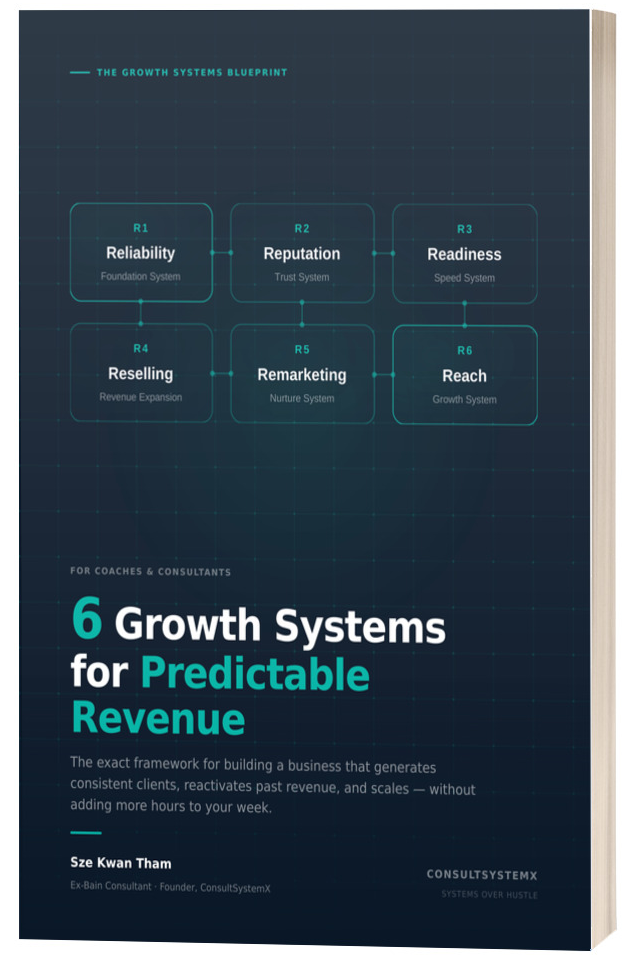
Two parts of a business handle this moment. The first is how fast and clearly a prospect moves from first contact to a booked, qualified call, which I call Readiness. The second is what happens to everyone who doesn't say yes right away, which I call Remarketing. Ghosting after a call sits right where they meet.
When remembering to follow up becomes the bottleneck, automate the follow-up. Trigger each message from the event that starts it, such as the call ending or a number of days passing with no reply, and make any reply stop the sequence. The words stay yours, and the timing stops depending on how busy your week was.
Get the free D6R Growth Blueprint
If you want to see where this sits in the whole picture, the free D6R Growth Blueprint covers Readiness and Remarketing in depth, along with the four other pieces behind predictable revenue.
Each one comes with a self-assessment and a 90-day roadmap for putting it in place. Get the free D6R Growth Blueprint.
Frequently Asked Questions
Why do prospects ghost after a good call?
Prospects ghost after a good call because their decision stalled and replying would mean admitting it. The usual causes are no clear next step, a second decision-maker you never met, shifting priorities, or a price or scope concern they'd rather not raise. A clear recap and an easy way to say no prevent most of it.
How many times should you follow up with a prospect who went silent?
Follow up three times after your recap, over two to three weeks: once in the same thread, once with a new angle, and once with a close-the-loop email. Each message should bring something new. After that, switch to a light monthly note and a check-in around 90 days.
What do you say to re-engage a quiet prospect?
Say something specific to their situation and give them an easy way to answer. Ask who else needs to be comfortable with the decision, share one idea tied to the problem they described, or ask whether it's still a priority or parked. Avoid "just checking in," which gives them nothing to reply to.
Should you send a break-up email?
Yes, send a close-the-loop email as your last direct follow-up. It tells the prospect you'll stop following up and lets them reply with one word, such as "still on" or "parked." Keep it free of guilt and pressure, and honor what it says: if they don't reply, stop the sequence.